How to make training fun without losing the learning
To make training fun, make the practice itself the fun part: short challenges with a goal, instant feedback and a retry, built from real work situations. Ten ways to do it, what research says about fun that distracts, and dull-to-fun rewrites you can copy.
The Arcadedo team, Gametize
9 min read
To make training fun, make the practice itself the fun part: turn content into short challenges with a goal, instant feedback and a chance to retry, built from real work situations. Keep sessions to a few minutes, give people some choice, and cut jokes or games unrelated to the lesson, because they distract.
Most advice on this topic is a list of tips: add humour, add videos, add a quiz. Some of it helps. Some of it makes training more enjoyable and less effective at the same time. This guide sorts the two, gives ten ways to make training fun that also help people remember it, and shows dull-to-fun rewrites you can copy. For the bigger picture, see our guide to gamification in employee training.
What makes training fun?
Training feels fun when people face a challenge they can win, see straight away whether they got it right, and can try again. It also helps when the content is about their real job and they have some say in how and when they do it. Entertainment on top, such as jokes, mascots and music, matters far less.
This lines up with self-determination theory, one of the most studied models of motivation. Ryan and Deci (2000) describe three needs that drive people to do something for its own sake:
- Competence: feeling that you are getting better at something. In training, that is a challenge at the right level and clear feedback.
- Autonomy: feeling that you chose it. In training, that is choosing when to play, retrying without penalty, and not being forced through slides at a fixed pace.
- Relatedness: feeling connected to others. In training, that is team goals, shared examples and a facilitator who knows the work.
Training that meets these needs feels fun even when the topic is dry. Training that ignores them feels like a chore, however many cartoons it has.
Can making training fun hurt learning?
Yes, when the fun has nothing to do with the lesson. Interesting but irrelevant extras, such as an off-topic joke, a funny video or a decorative game, pull attention away from what people need to learn. Researchers call these seductive details, and studies consistently find that people learn less with them than without them.
A meta-analysis by Rey (2012) found that people learn more deeply from material that leaves seductive details out. A later meta-analysis of 58 studies with more than 7,500 students reached the same conclusion (Sundar and Adesope, 2020; summary from Washington State University). The harm was larger when the distraction was static, like a joke or image that stays on screen. That review measured learning only, not motivation, so off-topic fun may still lift interest; it just does not help people remember the content.
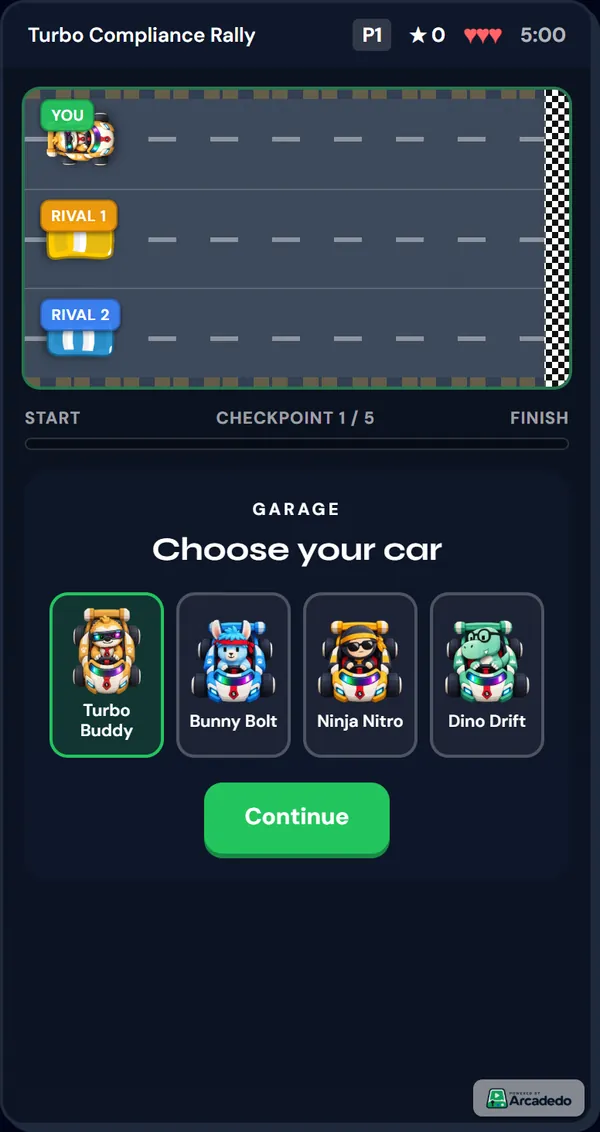
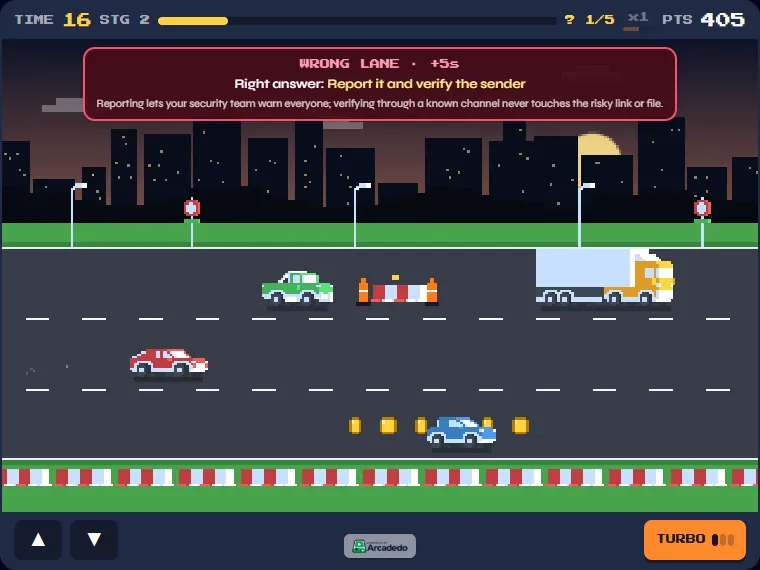
The lesson for trainers is simple: the fun must be the practice, not decoration around it. A racing game where every answer moves your car is fun that makes people recall the content. A funny cat video before a policy slide is fun that competes with it.
10 ways to make training fun
These ten tactics make training more enjoyable and keep people thinking about the content. Each one is about how people practise, not what you add on top. Use three or four together; you do not need all ten in every session.
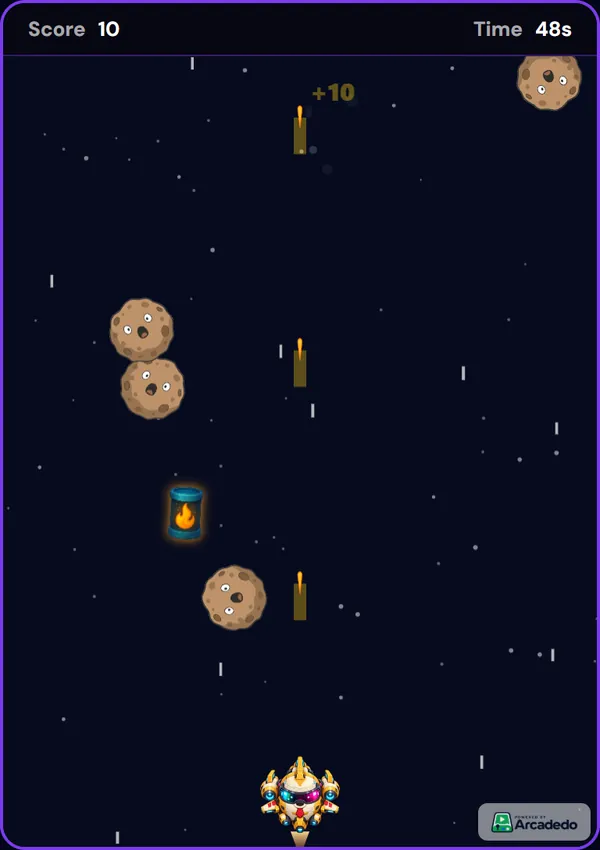
- Turn questions into a game. A quiz becomes a race, a maze or a match-3 board. The questions stay the same; answering them becomes the way you win. Practising recall is one of the best-supported ways to remember things (Roediger and Karpicke, 2006).
- Use real situations, not definitions. "A customer wants a refund after 35 days. What do you do?" is more interesting than "What is the refund window?" and it trains the decision people actually make.
- Keep it short. Three to five minutes per topic. People enjoy a short challenge they can finish on a break far more than a 40-minute module. See how many questions a training quiz should have.
- Give instant feedback with a reason. Show whether the answer was right and one sentence on why. Waiting until the end for a score removes the moment of learning.
- Set a goal to beat. A pass score, a timer or a personal best gives people a reason to try. Without a target, there is no challenge to enjoy.
- Let people retry. A second attempt turns a wrong answer into learning instead of a failure. Retrying also gives more practice, which helps memory.
- Give people choice. Let them pick when to play, which topic to tackle first, or which game to try. Small choices raise motivation more than big rewards.
- Use friendly competition carefully. Team goals and personal bests motivate most people. Public rankings across shifts or regions often demotivate the people at the bottom, who are usually the ones the training is for.
- Make it look like yours. Your logo, colours and real examples from your workplace make training feel made for people, not bought off a shelf.
- Bring it back. Replay the same game a week or a month later, with a few questions swapped. Coming back to a short game is easy; coming back to a slide deck is not.
How do you make boring training fun?
Rewrite the activity, not the slides. Find the part of the training where people passively read or listen, and replace it with a short task where they decide something and see the result. The content often barely changes; the learner's job changes from reading to choosing.
| Dull version | Fun version | Good template |
|---|---|---|
| 20 slides of product features | Match each customer need to the right product in a match-3 board | Star Match |
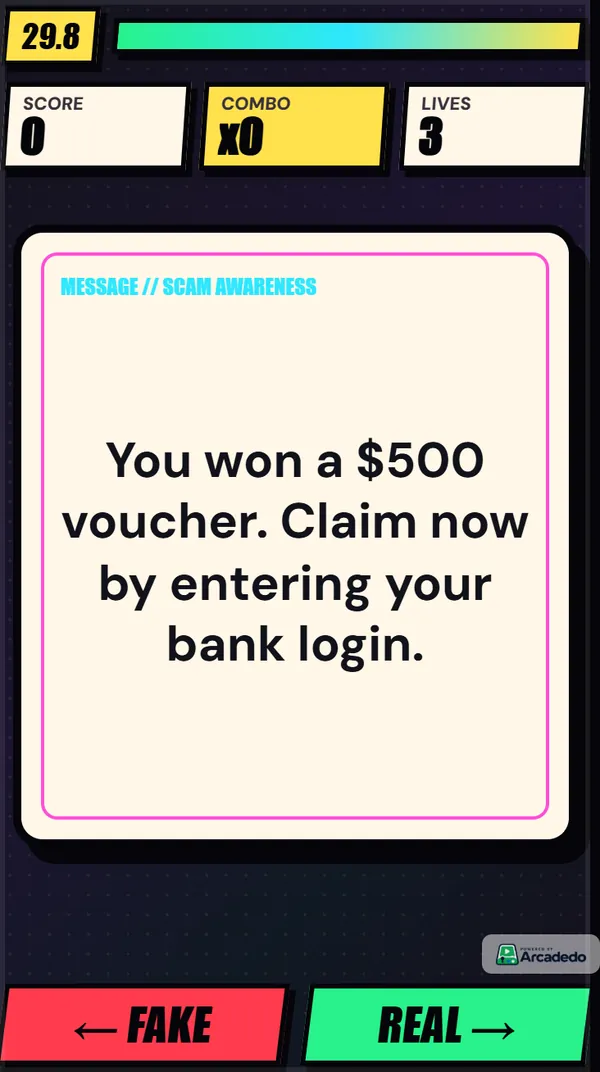
| Read the phishing policy, tick "I understand" | Swipe 15 real-looking emails as real or fake, with the reason after each | Real or Fake |
| End-of-module quiz of 10 questions | The same 10 questions as a race against the clock | Turbo Quiz Racer |
| Safety rules read aloud at a toolbox talk | A three-minute game on the shift's phone, with a pass mark | Checkpoint Rush |
| A list of company facts for new hires | Collect each fact as you explore a maze | Mini Maze |
| A prize draw at the end of a workshop | A branded prize wheel people spin after they pass | Spin the Wheel |
Good questions matter more than the game around them. Our guide on how to write multiple-choice questions shows how to turn a definition into a decision.
How do you make mandatory compliance training fun?
Keep the required course, then add short games around it that make people use the rules. Compliance content is fixed, so the fun comes from practice: scenario questions about real grey areas, a quick game after the course, and refreshers spread through the year instead of one long annual module.
- Ask about grey areas. "A supplier offers you concert tickets during a tender. What do you do?" is more engaging than "What is the gift limit?" and closer to what auditors care about.
- Split the annual module. Four three-minute games across the year beat one 45-minute course in December, and spacing helps people remember.
- Score against a pass mark, not each other. Compliance is not a competition. A private pass mark keeps it fair.
- Show the reason after every answer. The explanation is where people learn why the rule exists.
For topic-by-topic ideas, see compliance training games and safety training games.
How do you make online or virtual training fun?
Give people something to do every few minutes. Online sessions lose attention fastest when one person talks to a wall of muted cameras. Break the session with a short game everyone plays on their own phone or browser, then talk through the questions most people missed.
- Play, then discuss. Share a game link in the chat, give everyone three minutes, then ask about the hardest question. The discussion is often the best part.
- Use the chat. Ask people to post their score or their answer to a scenario before you reveal it.
- Keep the game outside the call. A link that opens in any browser works for people on a laptop, a phone or a slow connection (Share your game link).
- Send it again afterwards. The same link works as homework or a refresher next week.
If you are deciding between a plain quiz and a game for a knowledge check, see quiz or game for a knowledge check.
How do you know if fun training worked?
Measure learning, not just enjoyment. People saying they enjoyed a session tells you the format landed; it does not tell you they learned anything. Check the pass rate, the questions most people missed, and whether scores hold up when you replay the game weeks later. Then look for the change on the job.
| What you want to know | What to look at |
|---|---|
| Did people take part? | Players, completion rate, plays per player |
| Did they enjoy it? | Replays, voluntary plays, a one-question rating |
| Did they learn it? | Pass rate and average score |
| Where are the gaps? | The most-missed questions |
| Did it stick? | Scores on the same game four to six weeks later |
| Did work change? | Errors, incidents, escalations or quality checks from your own systems |
Each Arcadedo game has an analytics page with players, plays per player, completion rate, pass rate, average score and the most-missed questions. Research backs the approach in general terms: a meta-analysis of 40 experiments found small but positive effects of gamification on learning, motivation and behaviour (Sailer and Homner, 2020). Your own numbers will tell you more than any average.
How do you turn training into a game in Arcadedo?
Pick a template, add your questions or facts, set a pass score, brand it and share a link. Building and hosting games in Arcadedo is free, and a first game takes about ten minutes. Credits are only used for optional AI help and for removing the small Arcadedo badge.
- Pick a template. Open Templates, click Preview & Play to try one, then Use This Template. For a first game, Turbo Quiz Racer is the simplest.
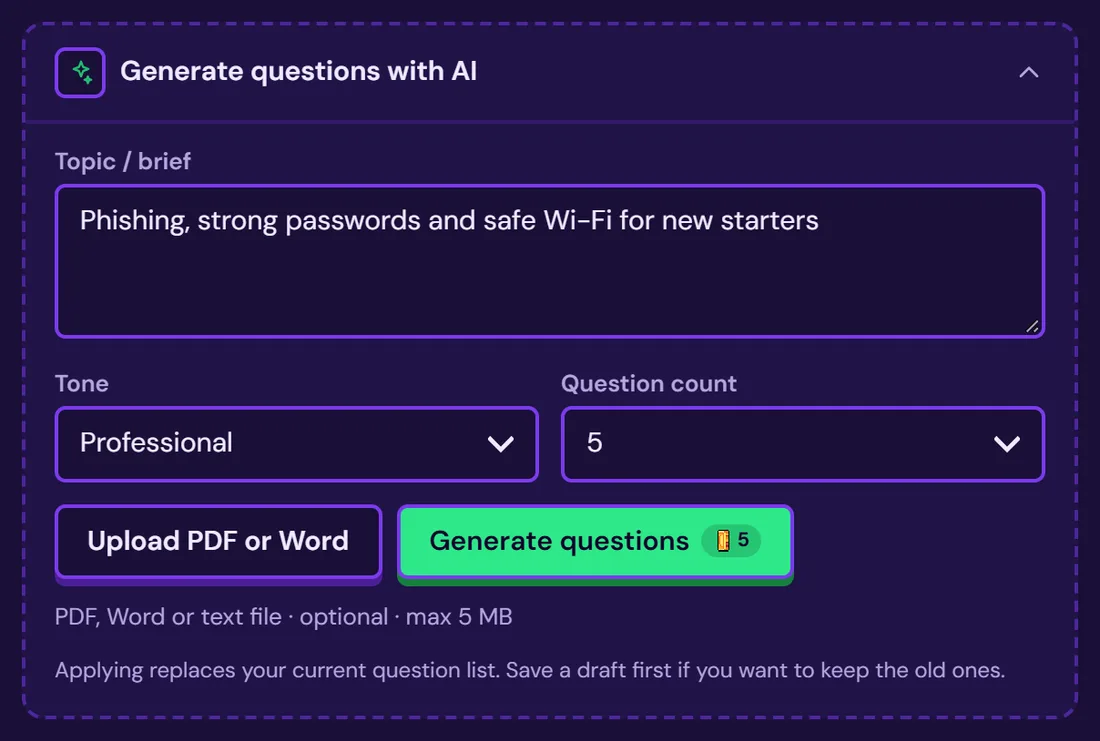
- Add your content. Type your questions and short explanations in the Content step, or click Generate with AI to draft them from a topic or an uploaded PDF, Word or text file (5 credits per batch). Edit every draft. The Add questions or facts guide walks through it.
- Set the challenge and brand it. Choose a pass score, then add your logo and colours.
- Publish and share. One click gives a link that plays on phones and desktops. Reuse it for refreshers; edits update the same link.
Frequently asked questions
How can I make training more fun for employees?
Turn the practice into a short challenge: a game of three to five minutes with a goal to beat, instant feedback and a retry. Use real situations from their job instead of definitions, give people a choice of when to play, and replace passive slides with tasks where they decide something.
Does humour help or hurt training?
Humour helps when it is about the lesson, such as a funny but realistic example of a mistake. It hurts when it is off-topic, because interesting but irrelevant details pull attention away from what people need to learn. Keep jokes tied to the content and avoid funny images that stay on screen.
What are fun training activities for employees?
Quiz races, real-or-fake judgement drills, match-up games, scenario questions about grey areas, short team challenges and a prize wheel after people pass. The best activities make people recall and use the content, rather than watch something entertaining next to it.
How do you make boring compliance training fun?
Keep the required course, then add short games that ask about real grey areas, show the reason after each answer and use a private pass mark. Split one long annual module into short refreshers through the year, which is also better for memory.